Expanding the map: Measuring foundational learning with IEA’s Literacy and Numeracy Assessment (LaNA)

The latest international study by the International Association for the Evaluation of Educational Achievement (IEA) supports countries in monitoring educational quality to inform national education policies and build sustainable system capacity.

by Dana Kelly, International Association for the Evaluation of Educational Achievement
|
4 minutes read
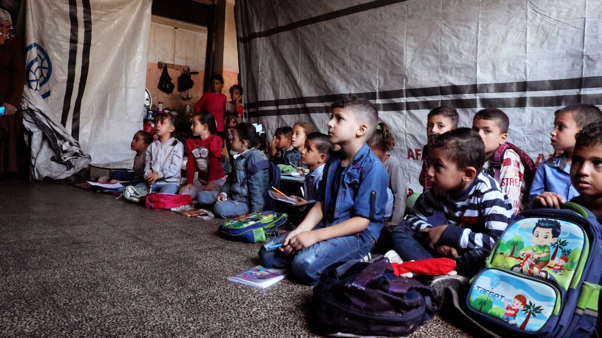
Palestinian children listen to their teachers. Credit: Dr. Mohammad Matar, LaNA National Research Coordinator, Palestinian National Authority

Palestinian children listen to their teachers.

Credit: Dr. Mohammad Matar, LaNA National Research Coordinator, Palestinian National Authority

An oft-cited statistic is that 7 in 10 children in low- and middle-income countries cannot read with comprehension by age 10.

This sobering figure has driven a wave of interventions and initiatives aimed at strengthening foundational learning.

However, a critical obstacle remains: we often don't know whether those efforts are working or even what is needed in particular contexts.

Many low- and middle-income countries still lack systematic, high-quality data on what their children are actually learning.

Without that evidence, it is nearly impossible to assess the quality of education let alone design reforms to improve it. And without internationally comparable data, tracking progress on Sustainable Development Goal (SDG) 4—Inclusive and Equitable Quality Education—becomes a guessing game.

The scale of the data gap is stark. In the most recent World Education Statistics report (UIS 2025), only 17 of 48 sub-Saharan African countries had data for SDG Indicator 4.1.1b that measures the share of children reaching minimum proficiency in reading and mathematics by the end of primary school. For most of those 17 countries, the most recent data was collected in 2019.

Expanding the map: Measuring foundational learning with IEA’s Literacy and Numeracy Assessment (LaNA)

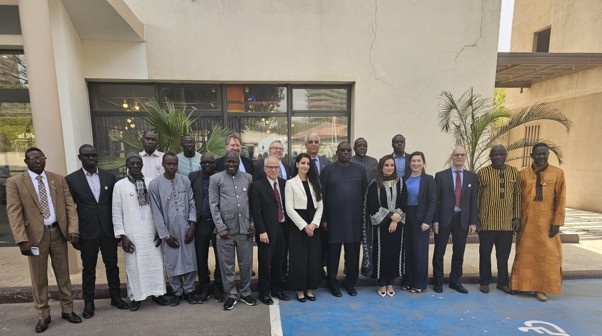
Participants at the launch of the LaNA Linking Study Report, Dakar, Senegal, February 2025.

Credit:
IEA

A new tool for measuring what matters

IEA's Literacy and Numeracy Assessment (LaNA) is helping to close this gap. LaNA offers countries a reliable, internationally comparable option for measuring foundational learning and reporting on SDG 4.1.1b, with a particular focus on sharing the tool with education systems that have historically lacked access to such tools.

LaNA's mathematics and reading comprehension assessments are psychometrically linked to the trusted TIMSS (Trends in International Mathematics and Science Study) and PIRLS (Progress in International Reading Literacy Study) assessments.

The benchmarks for TIMSS and PIRLS align to minimum proficiency levels for SDG 4.1.1b reporting (specifically, the TIMSS Intermediate International Benchmark for mathematics and the PIRLS Low International Benchmark for reading).

Crucially, LaNA also aligns with these established benchmarks and goes further. In addition to reporting the percentages of students reaching minimum proficiency for the purposes of SDG reporting, results are provided in relation to the full range of TIMSS and PIRLS International Benchmarks (Low, Intermediate, High, and Advanced).

Moreover, LaNA introduces new ‘Basic’ benchmarks designed to capture emerging reading comprehension and mathematics skills.

LaNA’s targeted design means education systems can gain meaningful insights into students who are still developing foundational skills, not just those who have reached minimum proficiency. It also tells us how many children have reached higher proficiency levels.

Well-defined benchmarks that reflect a continuum of skills and understanding provide policy makers and educators with valuable information about what children are learning and how to help them improve.

Meeting country needs and building capacity for the future

LaNA is designed to be flexible and operationally feasible. Unlike other international assessments, LaNA is not tied to a fixed study cycle which means countries can decide when to implement it.

LaNA is a paper-and-pencil assessment and countries can add to the international context questionnaires for students, teachers and schools to collect information pertaining to national policy issues.

The value that LaNA places upon flexibility for national alignment and capacity development enables countries to address critical national policy questions and build transferable skills and institutional experience, thereby strengthening their learning assessment systems—also a key priority for GPE.

 

“Implementing LaNA gives countries the tools to make evidence-informed policy decisions, both now and into the future. Importantly, this doesn’t mean only utilizing the rich data on educational quality and the home and school factors that affect student learning, but it also involves the building of local expertise for long-term sustainability in monitoring educational progress.”

Dirk Hastedt, IEA Executive Director

LaNA data now in the UIS database

A significant milestone has been reached with LaNA data now included in the UIS (UNESCO Institute for Statistics) database for SDG Indicator 4.1.1b.

As the official statistical agency of UNESCO and the custodian agency for SDG 4 on education, UIS's recognition of LaNA marks an important step in expanding the global evidence base for learning outcomes.

Data for Egypt, Nigeria, the Palestinian National Authority and Pakistan from a special 2023 LaNA administration are now available through the UIS Data Browser:

  • For Nigeria and the Palestinian National Authority, these represent the first-ever data for SDG Indicator 4.1.1b.
  • For Egypt and Pakistan, they are the most recent data available.

Burkina Faso and Senegal also participated in LaNA in 2023 and their data are publicly available in the LaNA international report and database, though are not included in the UIS database because these two countries have trend data from PASEC for Indicator 4.1.1b.

The full set of results from the 2023 administration of LaNA, including achievement across all International Benchmarks, distributions of achievement and contextual data are available here.

"UIS welcomes the inclusion of LaNA data in the UIS database for monitoring SDG 4.1.1b. Having more high-quality, internationally comparable data on learning outcomes is essential for tracking progress on SDG 4 and supporting country reporting, and LaNA offers countries an additional rigorous and accessible option for doing just that."

Svein Østtveit, Acting Director of UIS

Data transforms education. When countries can see clearly where their students are and where they are falling behind, they can take targeted, evidence-based action.

LaNA expands the number of countries that have high-quality data on foundational learning and helps ensure that no child is invisible in the data.

Explore more about LaNA and access the data here.

Related blogs

Leave a comment

Your email address will not be published. All fields are required.

The content of this field is kept private and will not be shown publicly.

Comments

  • No HTML tags allowed.
  • Lines and paragraphs break automatically.
  • Web page addresses and email addresses turn into links automatically.